

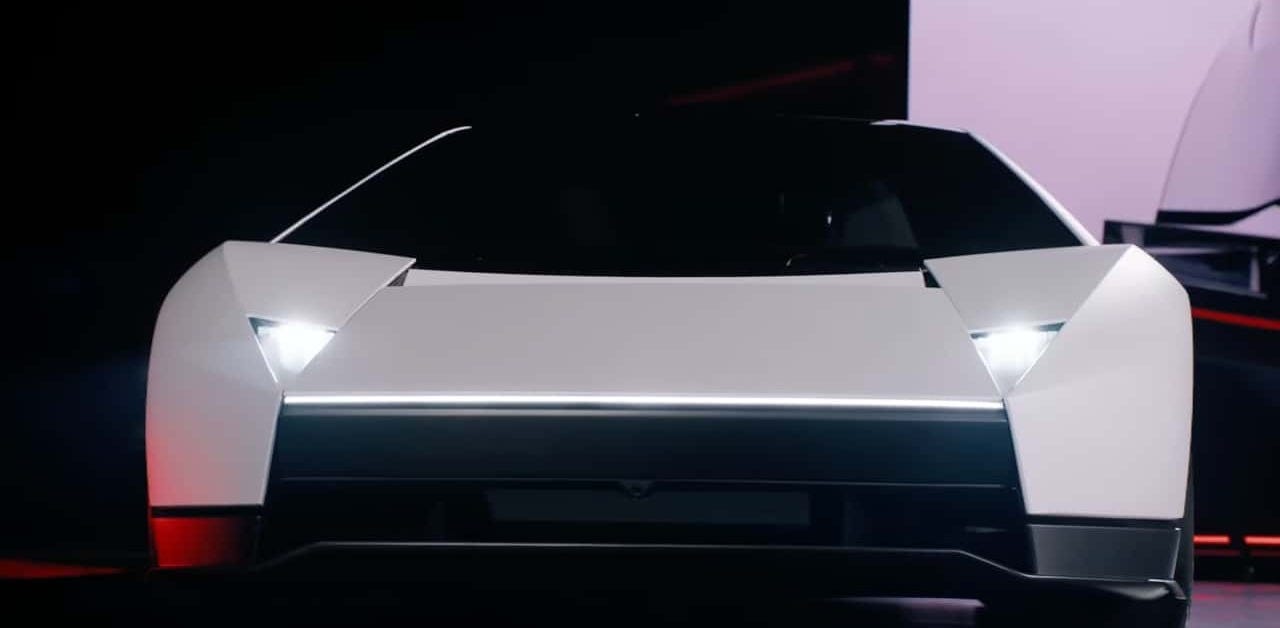
Good morning! Tesla finally showed off the Roadster, and it did things cars aren't supposed to do. Meanwhile wholesale prices jumped the most in four years, the bond market is pricing in real trouble at one AI company, and Amazon wants you wearing a microphone.
Let's get into it.
📊 MARKETS
Money ran out of tech and into the boring stuff.
Nasdaq: 26,713.03 ↑ 0.08%
S&P 500: 7,744.06 ↑ 0.33%
Dow: 52,177.69 ↑ 1.08%
10-Year Treasury: 5.089% ↓ 10 bps
Bitcoin: $82,271.09 ↑ 0.73%
The Dow gained 556 points thanks to names like Nike, Home Depot and Sherwin-Williams. The Nasdaq spent most of the day in the red before clawing back to flat.
The bigger move was in bonds. The 10-year yield had its biggest one-day drop in more than a year, even though inflation data came in hot again. Gold rose about 2% to roughly $4,195 an ounce. When investors buy bonds and gold on a bad inflation day, they're telling you they're nervous.
🚀 THE TESLA ROADSTER IS BACK, AND IT FLIES (SORT OF)
Nearly nine years after Elon Musk first teased it, Tesla finally showed the next-generation Roadster last night at a SpaceX test site near Waco, Texas.
It was less a car launch and more a stunt show. The car drove upside down on a curved ramp, flipped off the top, and used thrusters borrowed from SpaceX to float back down to the ground. One version hit 0 to 60 mph in under a second.
There are three versions:
Performance: the "road ready" two-seater, no thrusters. $50,000 to reserve.
Thrust: two seats plus rear thrusters for launch-style acceleration. $250,000 to reserve.
Rocket: one seat, 10 thrusters, the one that does the flying tricks. Invite only.
What Tesla didn't share: a price. Back in 2017 it quoted $200,000 and promised deliveries in 2020. Now Musk says production starts in 2028.
The catch: a reservation is basically an interest-free loan to Tesla. People who paid $50,000 deposits in 2017 have been waiting almost a decade.
My take: this isn't about selling cars. Tesla stopped selling the Model S and X this year to make room for its Optimus robots. The Roadster is a marketing piece that shows off SpaceX tech under the Tesla brand, and that's exactly why people keep talking about a future Tesla and SpaceX combination. As a brand moment, it worked. As a business, it's a rounding error.
🔥 WHOLESALE PRICES JUST HAD THEIR WORST MONTH SINCE 2022
A day after the consumer inflation report, the producer side came in even hotter.
The producer price index, which tracks what businesses pay before anything reaches a store shelf, rose 1.3% in September. Economists expected about half that. It was the biggest monthly jump since March 2022. Over the past year, wholesale prices are up 6.3%.
Energy did most of the damage. Gasoline rose 20.3% in one month. Diesel rose 21% in a month and is up 115% from a year ago. Goods prices overall climbed 2.6%, the biggest increase since the government started tracking that series in 2009.
Why this matters more than it sounds: diesel moves trucks and trains. When shipping costs that much more, everything that gets shipped eventually costs more too. Even with food, energy and trade stripped out, wholesale prices rose 0.5% in the month and 5% over the year.
My take: this is the pipeline for next month's consumer prices. The Fed meets October 27-28, and two hot reports in two days make a rate hike much harder to skip. If you sell physical products, check your margins now, because your suppliers are about to send new price sheets.
🧨 THE BOND MARKET THINKS ONE AI COMPANY MIGHT NOT MAKE IT
The cost of insuring CoreWeave's debt against default hit a record of about 1,194 basis points yesterday. In plain English, that prices in a better than 60% chance that the AI chip landlord defaults within five years. A year ago, that number was around 30%.
CoreWeave carries roughly $50 billion in debt to build AI data centers, and its bonds are now yielding around 15%.
Then Nvidia's Jensen Huang stepped in. "CoreWeave's strength is improving every day," he said. "Their cost of capital is actually decreasing." He also said Nvidia doesn't need to backstop the company. Nvidia owns about 10% of it and is its main chip supplier. The stock flipped from a loss to close up nearly 6%.
The nerves aren't limited to CoreWeave. Default insurance on Amazon, Alphabet and Meta also hit records, though from much safer levels.
And then there's TSMC, the company that actually makes the chips. It posted record profit for the sixth straight quarter: net income up 69% to about $23.6 billion, revenue of $46.7 billion, and guidance of up to $54.3 billion next quarter. The stock still fell about 2% after its CEO sounded cautious about the economy and consumers.
My take: the AI story has split in two. Demand for chips is real, and the people selling picks and shovels are printing money. The question is whether the companies that borrowed tens of billions to rent those chips out can keep paying the bills if rates keep climbing. The answer to that one is in the bond market, not in a CEO quote.
🏷️ ANTHROPIC'S $2 TRILLION DREAM GETS A HAIRCUT
Anthropic's pitch to future shareholders this week was strong on paper. Revenue hit $16.8 billion last quarter, up 45% from the quarter before, and the company said it was profitable on an adjusted basis.
But the quarter before that, revenue more than doubled. Investors noticed the slowdown. Some who attended the investor day are now talking about a valuation around $1.5 trillion instead of the roughly $2 trillion that had been floated for the November IPO.
The other news: Anthropic gave six people from METR, a nonprofit that tests AI models for safety, employee-level access. They get company laptops, office space and the same internal tools as Anthropic's own risk team. METR can publish what it finds and Anthropic can't veto it, only redact narrow categories like customer data and model architecture.
My take: a 25% valuation haircut over one quarter's growth rate tells you how priced-for-perfection this whole sector is. And the safety move is smart timing. Nothing calms nervous IPO buyers like an outside auditor living in your building.
🛢️ THE "ENERGY CEASEFIRE" LASTED THREE DAYS
On Sunday, President Trump announced an energy ceasefire between Russia and Ukraine. Neither side said it had agreed to one. Ukraine paused strikes on Russian refineries for three days anyway. Russia kept hitting Ukraine's power grid, including an overnight attack with more than 850 drones.
So on Thursday, Ukraine went back to hitting refineries, starting with one in Russia's Ryazan region. Zelenskyy's message: "We're done."
Trump called it a "disgrace" and said Ukraine is just pushing world oil prices higher. Washington has also struck a deal to buy Russian diesel to bring fuel prices down before the midterms, now less than three weeks away.
Oil gave a mixed reaction. U.S. crude jumped 3% to $97.97 a barrel after a big drop in inventories and more attacks on ships near Hormuz, while Brent slipped slightly to $105.92.
My take: diesel is the political pressure point right now. It's up 115% in a year at the wholesale level, and it's exactly what Russian refineries produce. Expect fuel prices to stay at the center of foreign policy until Election Day.
🎙️ AMAZON WANTS TO RECORD YOUR DAY
Amazon launched two new gadgets from Bee, the AI wearable startup it bought last year.
The Bee Frontier is a $74.99 wristband (or clip) that listens to your conversations and turns them into summaries, to-dos and reminders. It's on sale now. The Bee Eclipse is a $99.99 card-sized device that snaps onto the back of your phone with 21+ days of battery. It's coming soon.
Summaries and 14 days of memory are free. Keeping more history costs $12 a month. And the devices connect to Alexa+ and Amazon.com, so what you talk about can turn into things you buy.
The privacy part: there's a light and a button, and Amazon says it'll prompt users to ask permission before recording. We'll see how often that happens at a dinner table.
My take: as someone who runs an ad network, I can tell you the most valuable data in the world is purchase intent. A device that hears you say "we need a new stroller" and connects straight to the world's biggest store is the holy grail. The $75 price tag is the cheap part. The data is the business.
🌍 A FEW OTHER THINGS ON THE RADAR
Cohere is buying a cybersecurity startup. The AI company signed a letter of intent for AISLE, a Prague and San Francisco startup started by Avast's former CEO. Its AI found 18 of the 24 security holes fixed in the latest release of curl, one of the most widely used tools on the internet. No price was disclosed.
YouTube wants your audiobooks. It's been talking to publishers about an audiobook feature that could launch next year, possibly bundled into its $15.99 Premium plan. Spotify and Audible should be worried, since plenty of people already listen to audiobooks on YouTube, many of them unofficial uploads.
Lyft is going after executives. Its new chauffeur brand, Alcove, launches in early 2027 and targets high-end corporate travel. It's built on TBR Global Chauffeuring, which Lyft bought last year. Business travel is where the margins are.
Gold had a big day. It rose about 2% to around $4,195 an ounce as yields and the dollar slipped. People don't pile into gold on a day stocks rise unless something is bugging them.